Traveling abroad used to mean one of two things: paying painful roaming fees on your home SIM, or hunting for a local SIM card the moment you land. An eSIM changes that completely — and in this guide, we'll explain exactly what it is, how it works, and why it's quickly becoming the default way travelers stay connected.
What Exactly Is an eSIM?
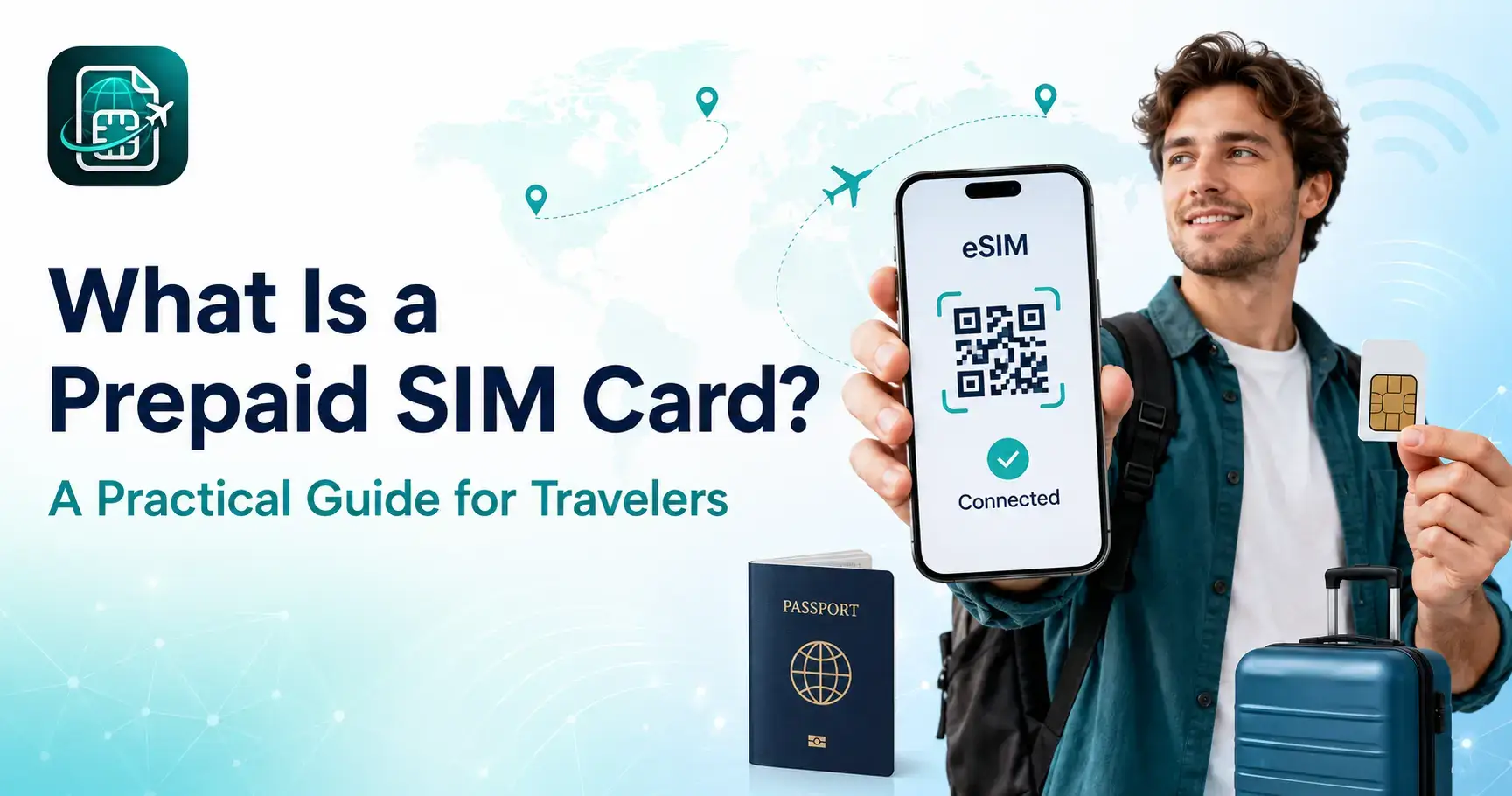
An eSIM (embedded SIM) is a digital SIM card built directly into your phone's hardware. Instead of inserting a small plastic chip, you activate a mobile plan by scanning a QR code or tapping an activation link. The plan is then stored digitally on your device — no physical card, no SIM tray, no waiting.
How Does an eSIM Work?
- Purchase a plan for your destination — choose the data amount and validity that fits your trip.
- Receive a QR code instantly by email after checkout.
- Scan the QR code using your phone's camera in your device settings.
- Turn on data roaming for the new eSIM plan, and you're connected — usually in under two minutes.
Why Travelers Are Switching to eSIM
- Save up to 90% compared to traditional roaming charges.
- Keep your main number active for calls and texts via dual SIM.
- Skip the airport SIM shop — activate before you even board the plane.
- Switch countries instantly — no need to swap a physical card at every border.
Is Your Phone Compatible?
Most smartphones released after 2018 support eSIM, including iPhone XS and newer, Samsung Galaxy S20 and newer, and Google Pixel 3 and newer. You can check by dialing *#06# — if an EID number appears, your device is eSIM-ready.
The Bottom Line
An eSIM gives you the same reliable connection as a physical SIM, with none of the hassle. Once you try it on a trip, it's hard to imagine going back to hunting for SIM cards in an unfamiliar airport.